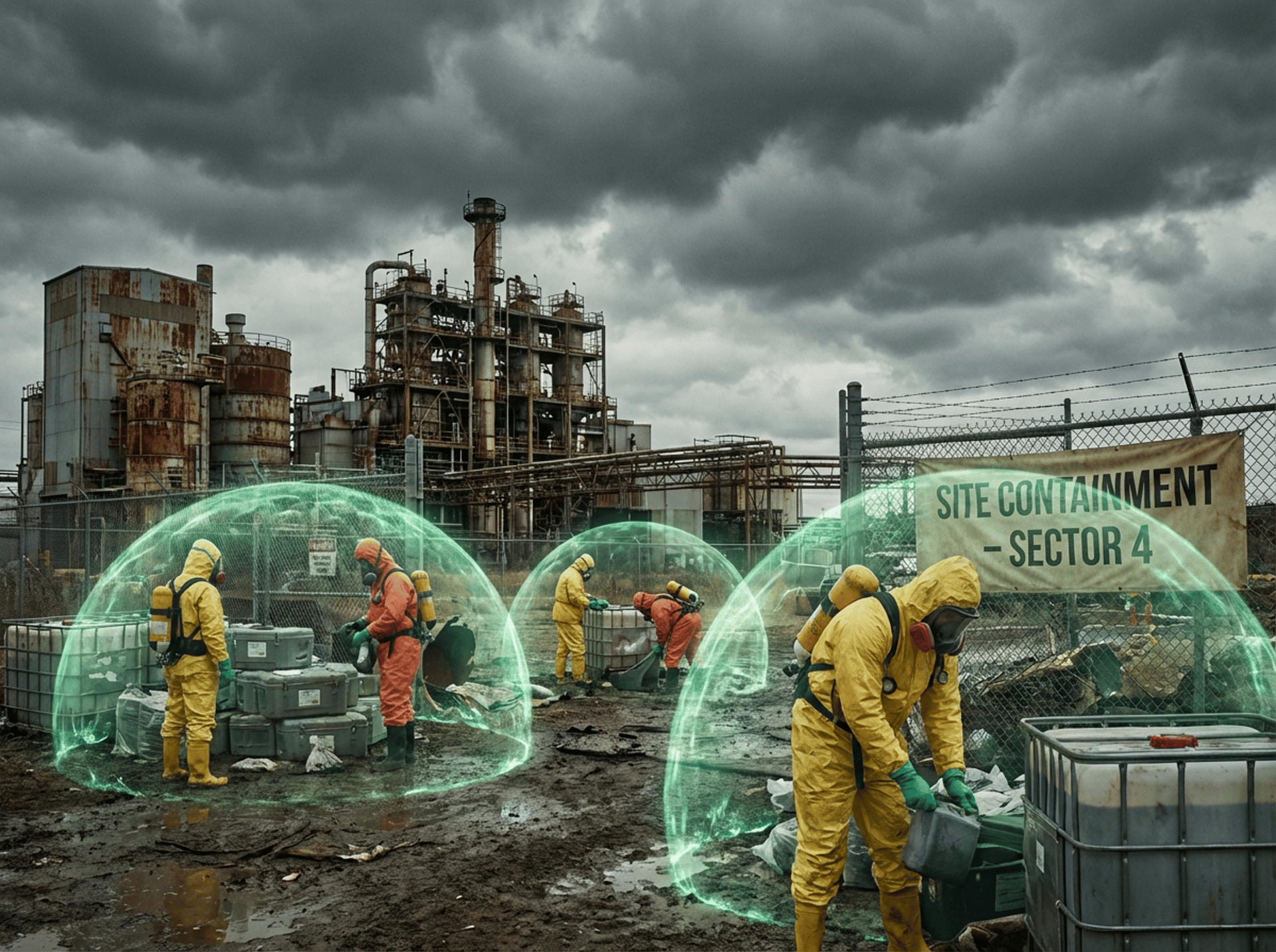
Protection against environmental claims and contamination-related losses
Pollution Liability insurance provides coverage for claims arising from the release, escape, or presence of pollutants that cause bodily injury, property damage, or environmental harm. Standard General Liability and Property policies typically exclude pollution-related claims, making Pollution Liability coverage essential for businesses whose operations could create environmental exposure.
Pollution claims can be extremely costly and may involve cleanup expenses, regulatory action, third-party lawsuits, and long-term damage. This coverage helps protect your business from financial loss related to environmental incidents, whether sudden or gradual, depending on policy terms.
What Pollution Liability Insurance Covers
Pollution Liability insurance typically responds to claims involving contamination or environmental damage, including:
Bodily Injury from Pollution
Coverage for injuries caused by exposure to hazardous substances, fumes, chemicals, or contaminants.
Property Damage from Contamination
Protection when pollutants damage land, buildings, water sources, or other property.
Cleanup and Remediation Costs
Coverage for environmental cleanup required by law, contract, or regulatory authority.
Third-Party Claims
Protection if customers, neighbors, or other parties sue for pollution-related damage.
Transportation Pollution
Coverage for pollution incidents occurring while transporting materials, if included.
Sudden and Accidental Releases
Coverage for unexpected discharges, spills, or leaks.
Gradual Pollution
Some policies provide coverage for long-term contamination if specifically included.
Legal Defense Costs
Attorney fees, court costs, and settlements associated with covered claims.
Coverage applies only to pollutants and exposures defined in the policy.
What It Does Not Cover
Pollution Liability policies are specialized and commonly exclude:
Known conditions not disclosed to the insurer
Intentional violations of environmental laws
Fines or penalties not insurable by law
Radioactive contamination
War or terrorism-related pollution
Property you own unless endorsed
Undeclared operations or locations
Contractual liability beyond policy terms
Coverage depends heavily on underwriting disclosures and policy wording.
Who Needs Pollution Liability Insurance?
Pollution coverage is commonly needed for businesses with environmental exposure, including:
Contractors and construction companies
Manufacturers and industrial operations
Fuel distributors and gas stations
Waste haulers and recyclers
Real estate owners and developers
Environmental consultants
Trucking and transportation companies
Healthcare and laboratory operations
Property managers and landlords
Many contracts, lenders, and regulators require Pollution Liability coverage before work can begin.
How Coverage Is Structured
Pollution Liability policies are often written on a claims-made basis, meaning:
The claim must be made during the policy period, and
The incident must occur after the retroactive date.
Policies typically include:
Per-claim limits
Aggregate limits
Retroactive dates
Deductibles or self-insured retentions
Site-specific or blanket coverage
Project-specific policies
Contractor pollution policies
Transportation pollution endorsements
Accurate disclosure of operations, materials, and locations is critical.
Real-World Claim Examples
A contractor ruptures a fuel line during excavation
A chemical leak contaminates nearby property
Mold or indoor air contamination leads to injury claims
A trucking accident causes a hazardous spill
A property owner is required to pay for soil cleanup
Environmental claims often involve both legal defense and cleanup costs, which can exceed standard liability limits.
Why Proper Placement Matters
Pollution coverage varies significantly depending on:
Type of pollutants involved
Whether coverage includes gradual pollution
Site-specific vs blanket policies
Regulatory requirements
Contractual obligations
Policy exclusions and sublimits
Improperly structured coverage can leave businesses responsible for cleanup costs that may exceed hundreds of thousands or even millions of dollars.
Our Approach
At Cory Washington & Co., we evaluate Pollution Liability based on the actual environmental exposure created by your operations, contracts, and locations. We review job scope, materials used, transportation risks, and regulatory requirements to ensure coverage is properly structured and aligned with real-world liability.
Our goal is to protect your business from environmental claims that standard policies simply do not cover.
Disclaimer
All insurance descriptions on this website are provided by Cory Washington & Co. LLC strictly for general informational purposes. They are not intended to be, and should not be relied upon as, legal, financial, or insurance advice. The information presented is general in nature and does not guarantee the availability, terms, conditions, or scope of any insurance coverage. Actual coverage is determined solely by the specific policy language issued by the insurer and remains subject to underwriting approval. Nothing on this website creates or implies an agent-client relationship, binds coverage, or alters any existing policy. Cory Washington & Co. LLC expressly disclaims any liability for actions taken, or not taken, based on the content provided here. For advice regarding your particular situation, please consult directly with a licensed insurance professional at Cory Washington & Co. LLC or another qualified insurance professional, and always review your policy documents in full.
CORY WASHINGTON & CO. LLC is a licensed insurance firm headquartered in Las Vegas, Nevada. National Producer Number (NPN): 21674625. In California, we operate as CORY WASHINGTON & CO. INSURANCE SERVICES (CA License No. 6016922). All insurance products and services are offered through properly licensed entities and are subject to underwriting approval, policy terms, conditions, limitations, and exclusions. Coverage availability varies by state and individual risk profile. Nothing on this website constitutes an offer or solicitation to purchase insurance in any jurisdiction where we are not licensed or authorized to conduct business. The information provided on this website is for general informational purposes only and does not constitute professional, legal, financial, or insurance advice. Visitors should not rely on this information as a substitute for consultation with a qualified, licensed insurance professional. Certain coverages may be placed with surplus lines insurers through a licensed surplus lines broker. Surplus lines insurers do not participate in state guaranty funds; insureds are therefore not protected by such funds. For product availability, state licensing verification, or coverage guidance specific to your needs, contact us directly.
© 2026 CORY WASHINGTON & CO. LLC. All Rights Reserved.